Collection: Edwardian Engagement Rings

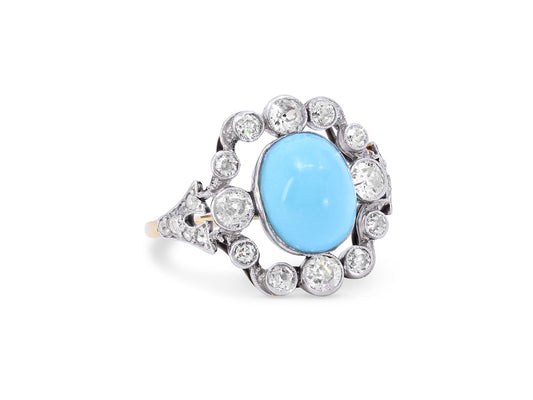
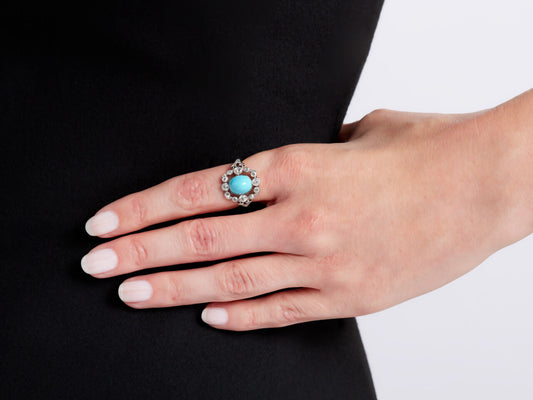
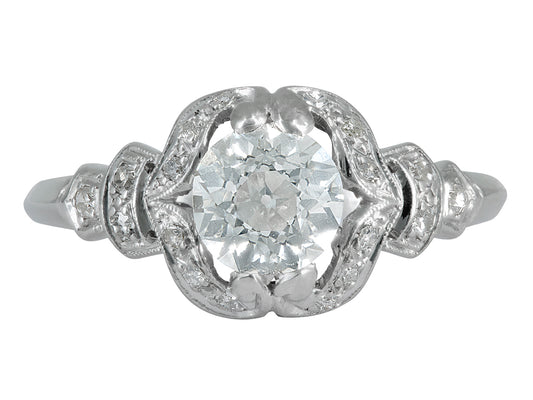
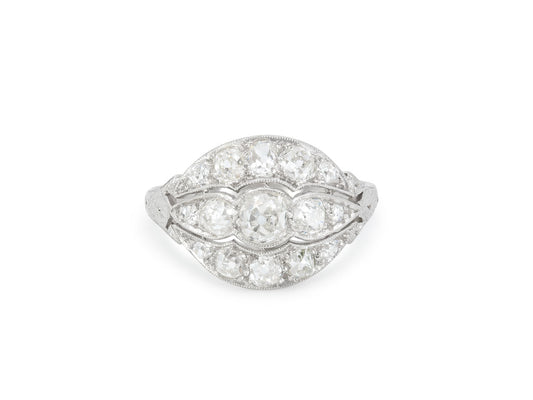
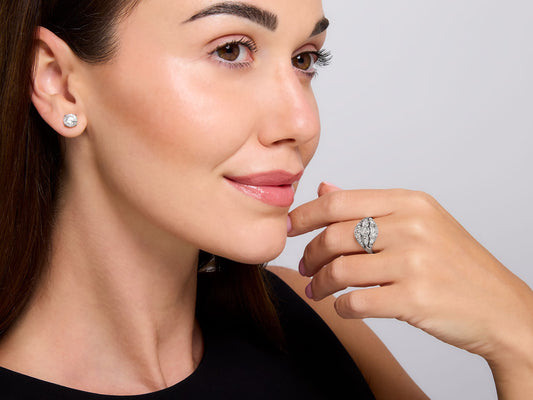
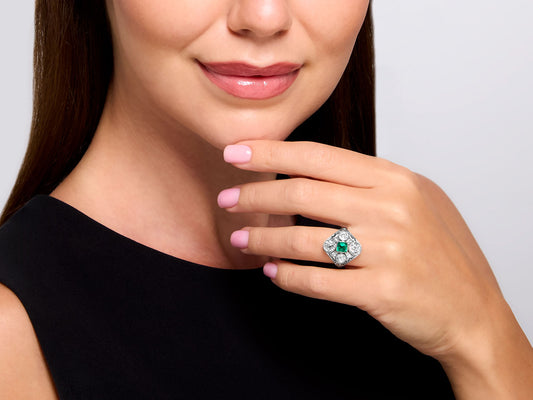
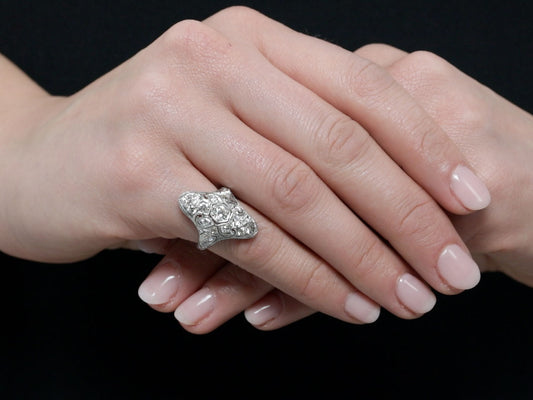
Discover exceptional Edwardian engagement rings from 1901-1915, showcasing the era's hallmark platinum craftsmanship and delicate lace-like designs that epitomize feminine elegance. Our collection features antique Edwardian jewelry with the period's signature techniques and styles including intricate filigree, millegrain detailing, long platinum chains, natural pearls and luminous old European-cut diamonds, set in ethereal openwork platinum settings. Rare Edwardian estate jewels reflect the sophisticated artistry of master jewelers who created delicate treasures to complement the graceful fashions of King Edward VII's reign and emphasize turn-of-the-century sophistication, featuring new diamond shapes such as marquise and emerald cuts. Every jewel we sell is vetted for quality, condition and authenticity. We stand behind every piece with complete documentation, relevant GIA certification, and the best return policy in the industry, a full money-back guarantee, no exceptions. 

9 products

FAQs

What is an Edwardian ring?

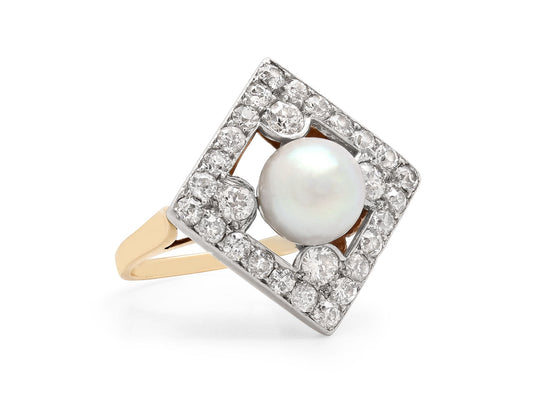
An Edwardian ring represents jewelry created roughly between 1901 and 1915, and is known for its understated yet feminine design that contrasts sharply with earlier styles from the Arts and Crafts and Art Nouveau eras. The hallmark of Edwardian jewelry is the pioneering use of platinum, enabling intricate designs heretofore not possible using softer gold and silver.  The strength of platinum allowed master jewelers to create ethereal and delicate designs with an almost lace-like appearance, with settings enhanced by milgrain edges and open fretwork. Because diamonds were extremely popular in the Edwardian period, new diamond-cutting techniques gave rise to old-European, marquise, emerald, baguette and briolette cuts. Edwardian ring styles often include elongated designs set with diamonds in openwork settings and natural pearls bordered by rows of diamonds. Edwardian rings also feature popular motifs like horseshoes, clovers, stars, hearts, bows, garlands and flowers with delicate filigree details.

What is Edwardian jewelry?

Edwardian jewelry, created roughly from 1901-1915, displays the era's hallmark platinum craftsmanship and delicate lace-like designs that epitomize feminine elegance. 

Edwardian jewelry is renowned for its intricate filigree work, millegrain detailing, and intricate airy designs. Long chains, brooches in garland, bow and floral motifs set in ethereal openwork platinum settings often accented with luminous old European-cut diamonds and natural pearls reflect the sophisticated artistry of master jewelers who created these treasures to complement the highly fashionable and graceful, flowing silk, chiffon and embroidered fashions of King Edward VII's reign. 

Now quite rare, fine Edwardian jewelry was made possible by the use of the newly available material, platinum, a difficult metal to work with due to its density and hardness, but remarkable in its flexibility and ability, unlike softer gold, to withstand heat in the jewelry making process. These characteristics allowed for wonderful creativity and innovation by truly master jewelers. With the advent of propane in the 1970s platinum fabrication became much easier and is considered the metal of choice for fine diamond jewelry today.

How does Beladora verify the authenticity of a piece?

Authenticating pieces of jewelry requires more nuanced expertise. Many thousands of pieces of jewelry have passed through our hands for over 40 years from every era and every maker. This familiarity enables us to know what a piece should look and feel like and if it has the expected quality of material and workmanship, the accurate makers marks and the correct signature in all the right places. Indeed, one of the easiest ways non-experts can be fooled is to assume a designer piece of jewelry is truly by that maker as pieces by commercial manufacturers are often outright fakes or signed fraudulently by a third party. 

In practice, we first look at the front and back of a bracelet, ring or brooch, turning it over in our hands to see​ that the workmanship on ​the reverse is just ​as ​fine as the detail on the front. Using the jeweler’s important tool, the loupe, we look carefully at many different touchpoints including the precision with which the ​diamonds are mounted in their settings, the manner in which gold or platinum links are connected to each other, the quality of the azuring, a most difficult and refined aspect of metalwork, the fineness of the material and we look for ​flawless ​polish.

If we have any doubts whatsoever as to authenticity, we submit the piece to the firm itself, be it Cartier, Van Cleef & Arpels, Verdura, David Webb and others. We also request the original bill of sale, box and papers for those items most commonly faked such as Cartier Love brackets and VCA Alhambra pieces. And just as banks know their customers, we, too, ensure we know enough about our clients to assure ourselves of their ownership and provenance. 

Our team of GIA-certified jewelry experts has such a well-regarded reputation in the international jewelry industry that we are frequently called upon to advise auction houses, appraisers and other dealers in matters of authenticity and value.