Skip to product information
1 of 6

Art Deco Diamond and Natural Seed Pearl Watch in Platinum

Art Deco Diamond and Natural Seed Pearl Watch in Platinum

Item WAT-504904
Price $9,550
Price Sale price $9,550
Sale Sold
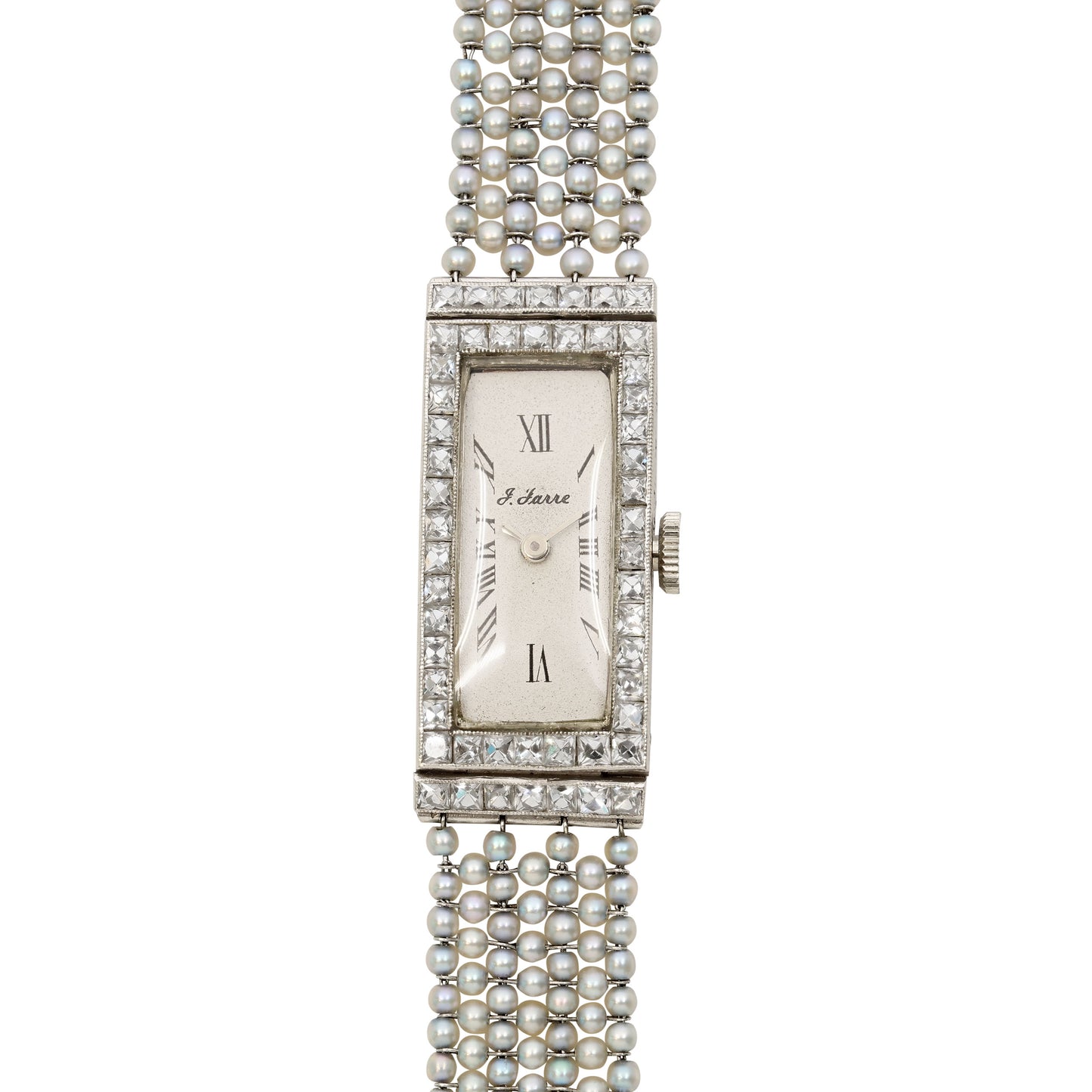
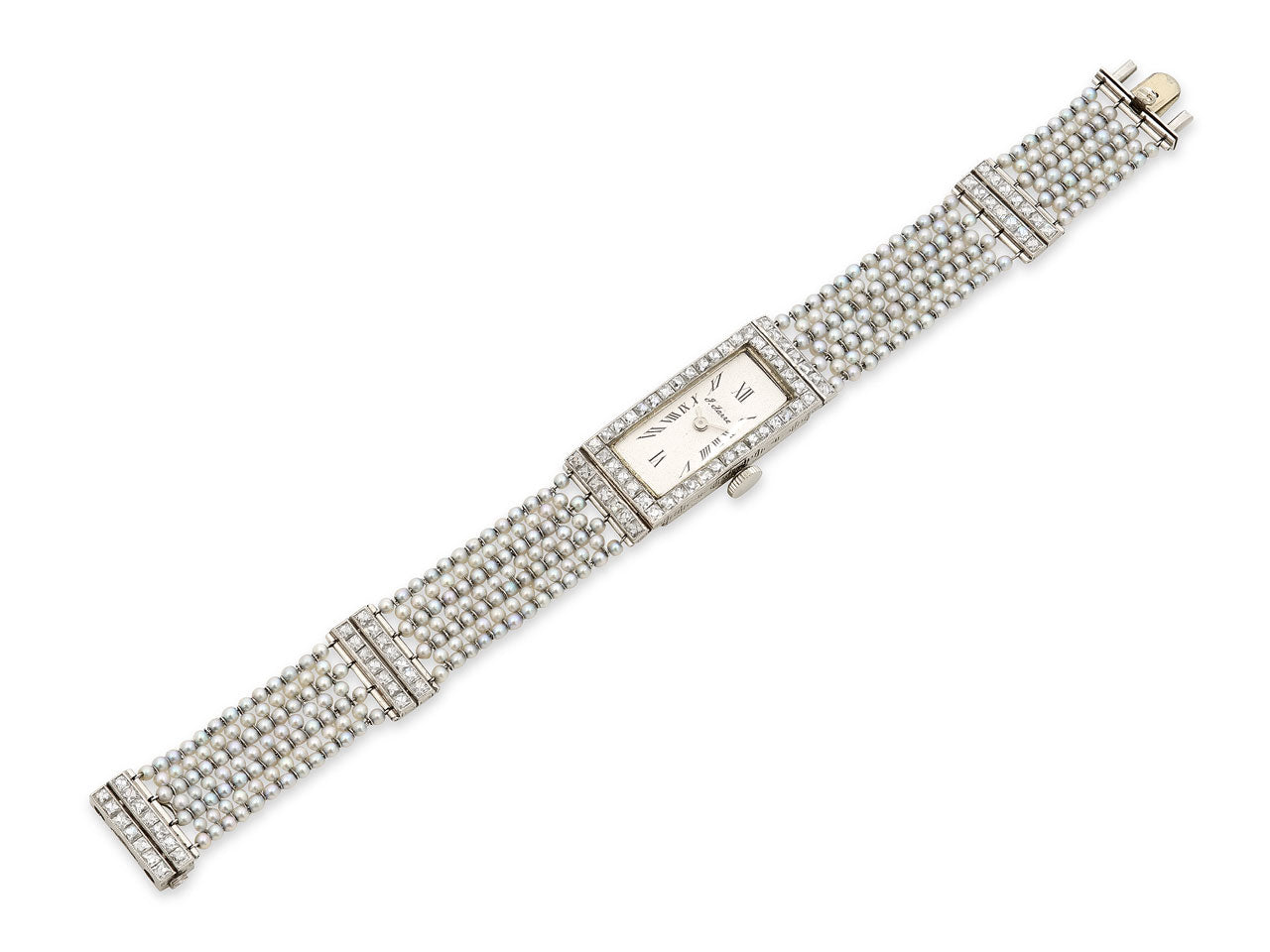
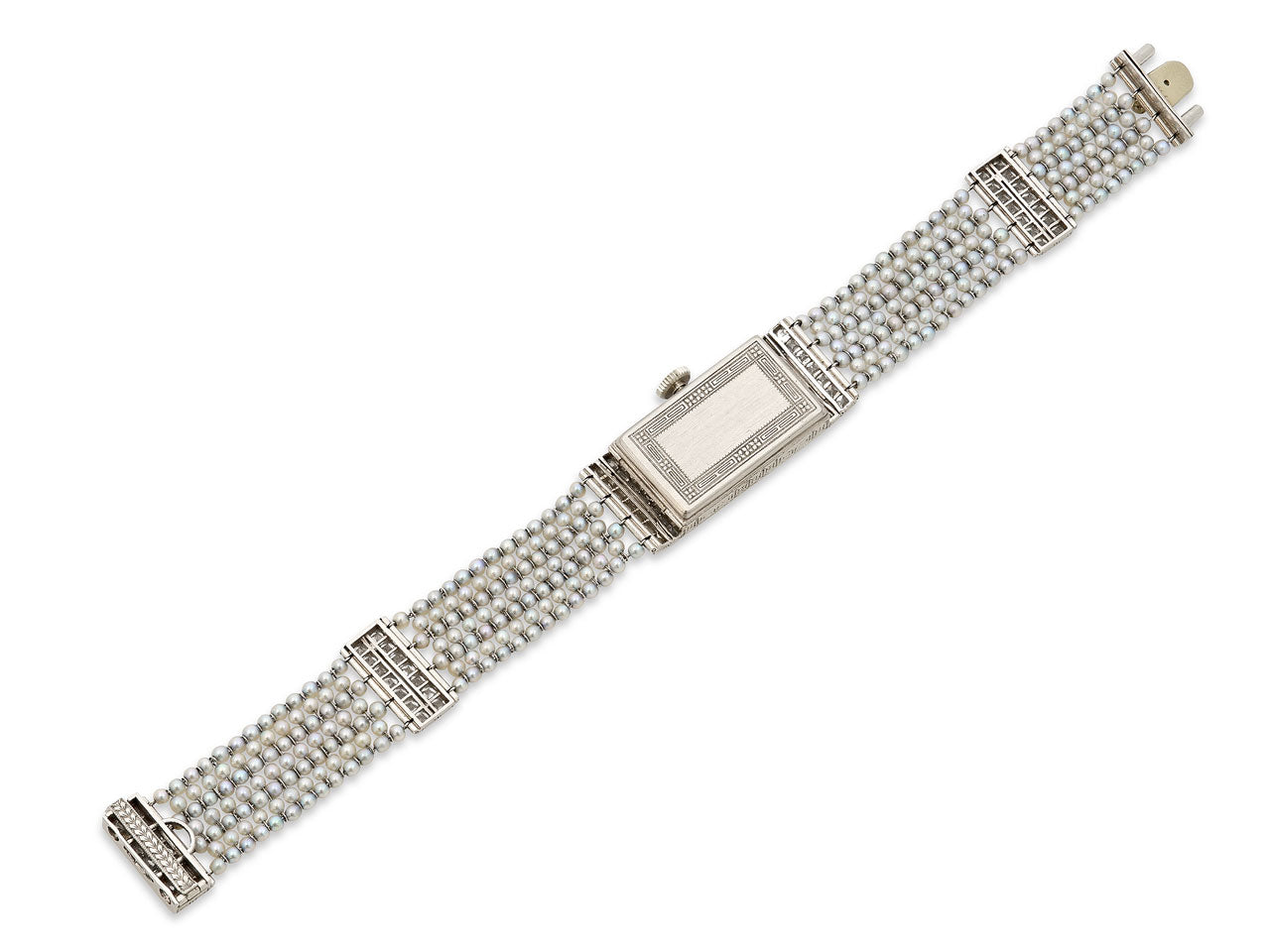
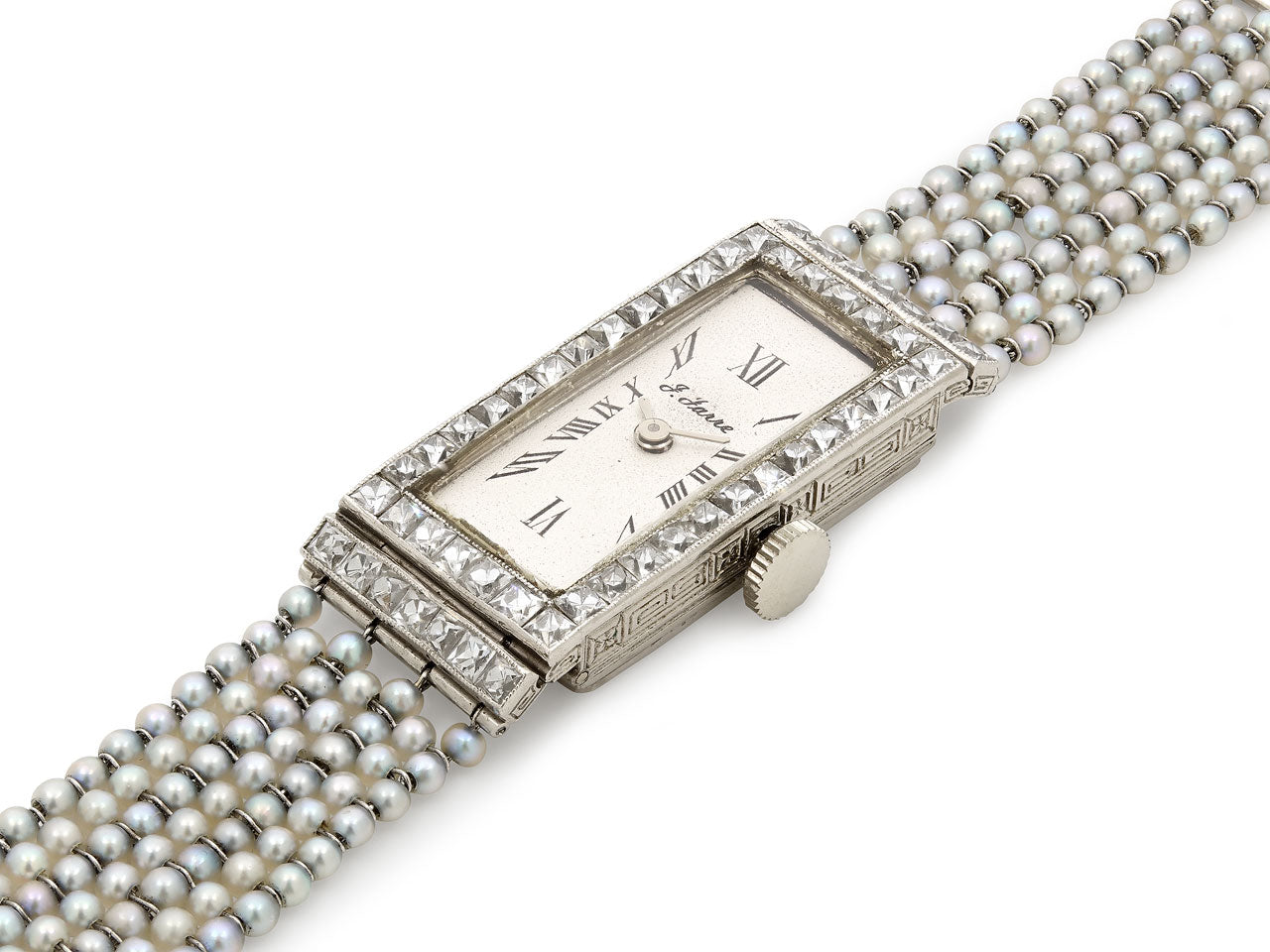
The elongated rectangular ivory dial with Roman numerals, marked "J. Jarre", within a French-cut diamond set bezel, to seven row gray and white seed pearl bracelet, with French-cut diamond spacer accents, the case engraved with Greek key and floral motifs. Movement signed M & W Ullmann.
Please note this item cannot be shipped internationally as it contains material that may be either protected or regulated.
  • Hallmarks: M. & W. Ullmann
  • Metal: Platinum
  • Movement: Manual
  • Gem Stone: Diamond 4.50 carats Old French cut 94 French-Cuts
  • Gem Stone: Pearl 353 Seed Pearls
  • Design Era: Art Deco
  • Circa: 1920-1930
  • Measurements: Case: 27.4 mm x 14.3 mm; Length: 6 1/4 Inches
  • Weight: 25.8 grams

About Art Deco Jewelry

Art Deco jewelry, which emerged in the 1920s and 1930s, is a distinctive style characterized by geometrically sophisticated designs and the use of luxurious material, typically platinum, set with diamonds, emeralds, rubies and sapphires contrasted with more uncommon semi-precious materials such as carnelian and black onyx. Incorporating striking contrasts of color, pattern and motifs inspired by ancient civilizations such as Egypt, the Art Deco period reflected the spirit of the Jazz Age, embodying glamour, innovation, and the optimism of a rapidly modernizing world. Jewelers embraced new cutting techniques and materials, creating fanciful pieces with sharp angles, stepped forms, and dramatic contrasts between light and dark gemstones.
Art Deco pieces are highly sought after by collectors today for their distinctive, recognizable style and exceptional craftsmanship. Notable designs include Cartier’s iconic Tutti Frutti bracelet, first created in the 1920s, intertwining mult-colored cabochon and cut gemstones with diamond vines and black onyx accents. Van Cleef & Arpels introduced their Mystery Set technique in the 1930s, threading rubies and sapphires along hidden platinum tracks creating the illusion of gems floating without visible means of support. Many important Art Deco pieces owned by wealthy and discerning collectors such as Marjorie Merriweather Post, Gloria Swanson and others are now in museum collections such as the Smithsonian and Victoria and Albert and those in circulation consistently command the very highest prices at auction and resale.

Authenticity

Authenticating pieces of jewelry requires more nuanced expertise. Many thousands of pieces of jewelry have passed through our hands for over 40 years from every era and every maker. This familiarity enables us to know what a piece should look and feel like and if it has the expected quality of material and workmanship, the accurate makers marks and the correct signature in all the right places. Indeed, one of the easiest ways non-experts can be fooled is to assume a designer piece of jewelry is truly by that maker as pieces by commercial manufacturers are often outright fakes or signed fraudulently by a third party.
In practice, we first look at the front and back of a bracelet, ring or brooch, turning it over in our hands to see that the workmanship on the reverse is just as fine as the detail on the front. Using the jeweler’s important tool, the loupe, we look carefully at many different touchpoints including the precision with which the diamonds are mounted in their settings, the manner in which gold or platinum links are connected to each other, the quality of the azuring, a most difficult and refined aspect of metalwork, the fineness of the material and we look for flawless polish.
If we have any doubts whatsoever as to authenticity, we submit the piece to the firm itself, be it Cartier, Van Cleef & Arpels, Verdura, David Webb and others. We also request the original bill of sale, box and papers for those items most commonly faked such as Cartier Love brackets and VCA Alhambra pieces. And just as banks know their customers, we, too, ensure we know enough about our clients to assure ourselves of their ownership and provenance.
Our team of GIA-certified jewelry experts has such a well-regarded reputation in the international jewelry industry that we are frequently called upon to advise auction houses, appraisers and other dealers in matters of authenticity and value.
We stand behind every piece with complete documentation, relevant GIA certification, and the best return policy in the industry, a full money-back guarantee, no exceptions.

Jewelry Care - Pearls

Pearls require gentle care to maintain their natural luster and beauty. Avoid contact with perfume, lotion or cosmetics as these products can damage the pearl's surface over time. Occasionally gently wipe your pearls with a soft, damp cloth and store them separately to prevent scratching from harder gemstones or metals. If worn frequently, pearl strands may stretch over time and need to be restrung, ideally with individual knots between each pearl, an easy and inexpensive process well worth doing to avoid unexpected breakage or loss.

We offer free shipping and free returns on all US orders View full details
 
  • EASY & FREE RETURNS

    60-Day Return Policy with Full Refund

  • 1-800-680-9569

    Monday - Friday | 9:30AM - 5:30PM PT

  • FREE SHIPPING

    On all US Orders

1 of 3

YOU MAY ALSO LIKE

RECENTLY VIEWED