Collection: Vintage Emerald Rings

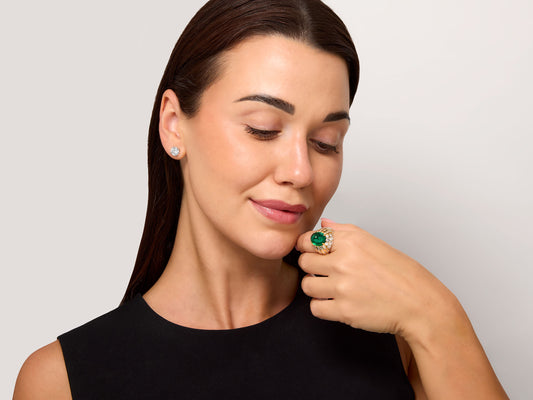
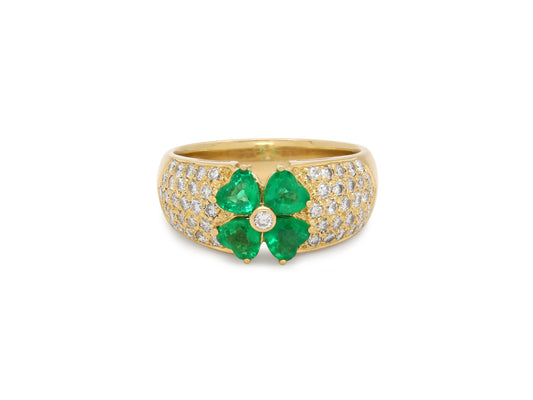
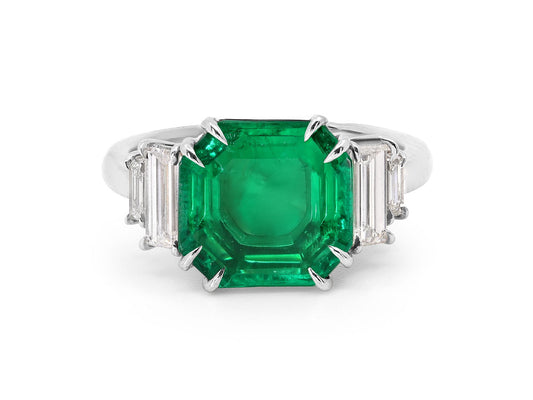
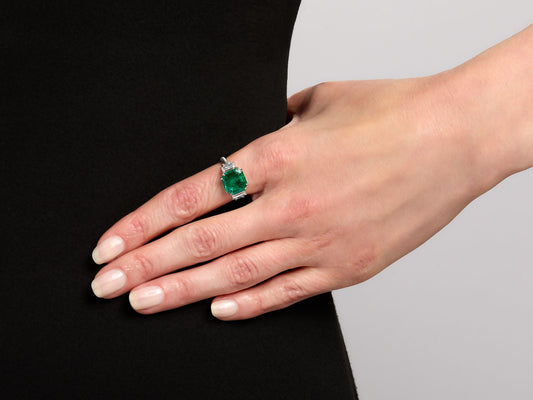
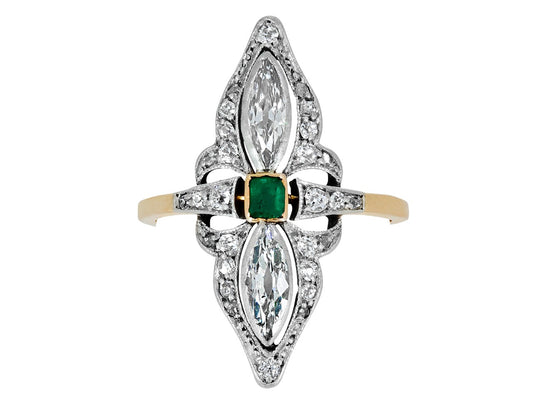
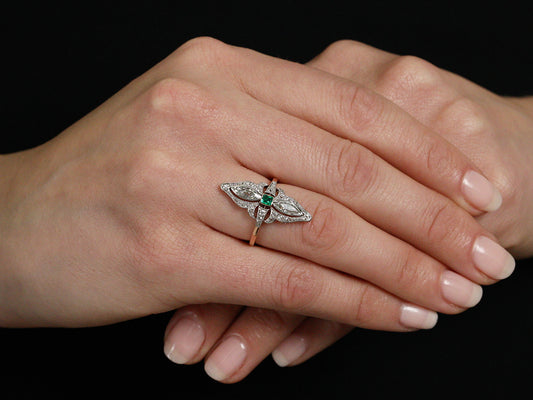
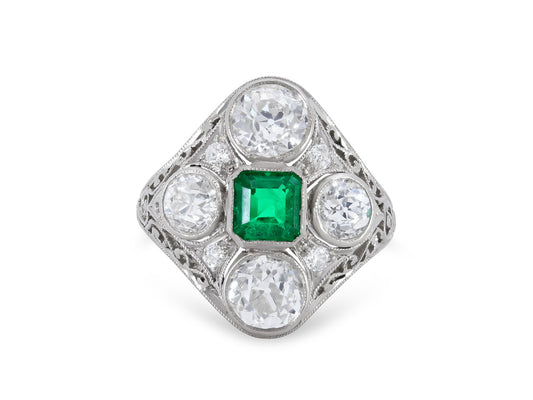
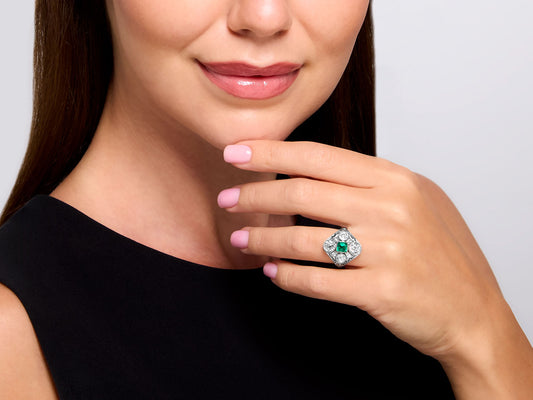
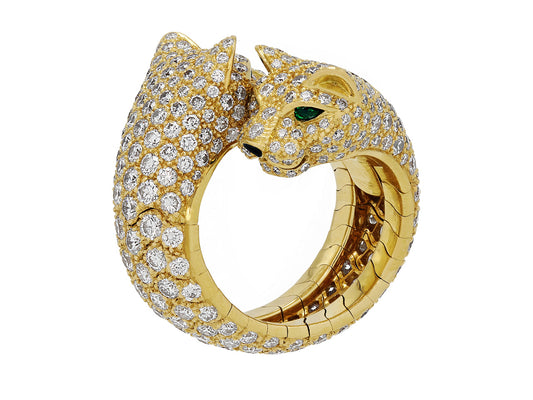
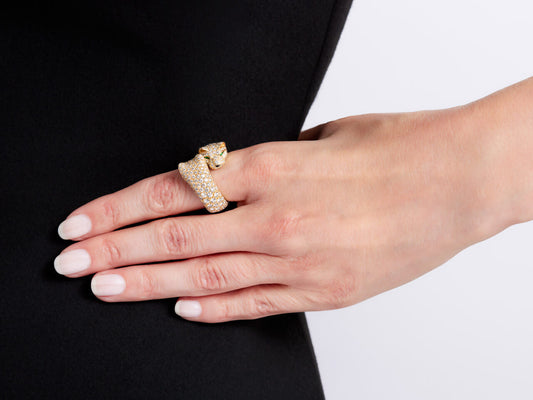
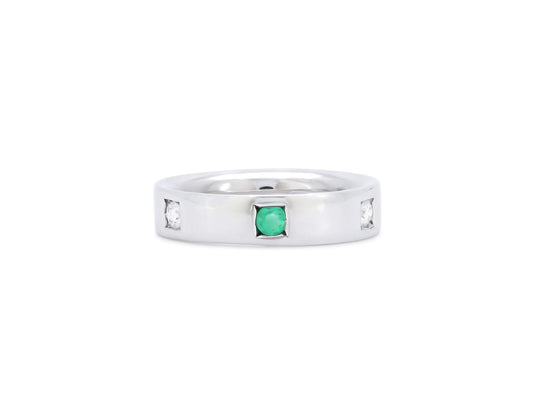
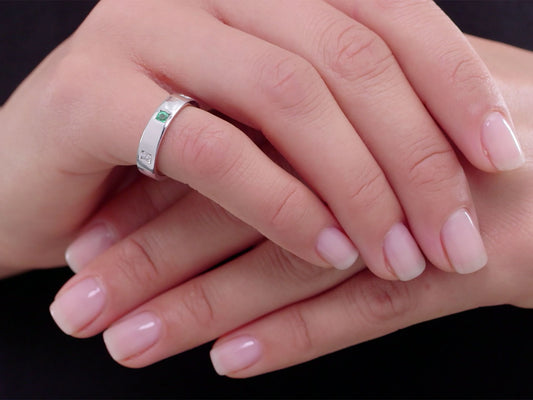
Discover emerald rings from the Edwardian, Art Deco and Mid-Century eras, featuring these elegant green gemstones. Our collection includes Edwardian emerald rings bezel set in platinum filigree, as well as Art Deco creations set with old mine cut diamonds and various square, calibre-cut and cabochon emeralds.

10 products

FAQs

What is the history and significance of emeralds in jewelry?

Emeralds have captivated humankind for centuries. Throughout history these brilliant green gemstones have been prized first by the Egyptians and Incas, then the Maharajas of India and today by jewelry lovers of all kinds. Important historic emeralds are found in the crown jewels of Britain, Iran and India and are admired for their color, size and elegance. Various authorities believe that emeralds have been favored throughout history as symbols of fertility, immortality and as talismans of wisdom and various supernatural powers. Emeralds are enjoyed today for their color, transparency and brilliance. Characteristic inclusions, called "jardin" or “the garden effect”, are common and the absence or presence of these inclusions helps determine value and gives personality and individuality to the stones. The most valuable emeralds combine superb rich color, high clarity, brilliance and significant size. The emerald is a fitting birthstone for May when spring reaches its verdant peak.

What are the different types of emerald?

Vintage emeralds come from a number of famous mines found in Columbia, Zambia and Brazil, as well as other countries around the world. The country of origin not only determines an emerald's color, ranging from light to bright to dark and every shade of green in between, but also its clarity, meaning the amount and type of inclusions found. The very best emeralds have astonishing clarity, but more frequently, inclusions are visible to the naked eye. This "Jardin" or so-called "Garden Effect" adds personality and individuality to appearance. Emeralds of all type and quality are more fragile than diamonds, rubies or sapphires and typically have microscopic fissures that reach the surface of the stone. All emeralds are oiled which minimizes these fissures.

How does Beladora verify authenticity?

Authenticating jewelry requires nuanced expertise. Many thousands of pieces of jewelry from every era and every maker have passed through our hands for over 40 years. This familiarity enables us to know what a piece should look and feel like, if it has the expected quality of material and workmanship, if the metal and makers marks are correct and if the expected signature is authentic.

As a first step, we look at the front and back of every bracelet, ring or brooch, turning it over in our hands to see that the workmanship on the reverse is as fine as the detail on the front. Using a loupe, the jeweler’s essential tool, we look carefully at many different touch points, some of which include examining the precision with which diamonds are mounted in their settings, the manner in which gold or platinum links are connected to each other, the fineness of the material, the quality of the azuring - a difficult and refined aspect of metalwork and lastly, the flawlessness of the polish.

If we have any doubts whatsoever as to authenticity, we submit the piece to the relevant firm, be it Cartier, Van Cleef & Arpels, Verdura, David Webb and others. We also request the original bill of sale, box and papers for those items most commonly faked such as Cartier Love brackets and VCA Alhambra pieces. And just as banks know their customers, we, too, ensure we know enough about our clients to assure ourselves of their ownership and provenance.

Our team of GIA-certified jewelry experts has such a well-regarded reputation in the international jewelry industry that we are frequently called upon to advise auction houses, appraisers and other dealers in matters of authenticity and value.