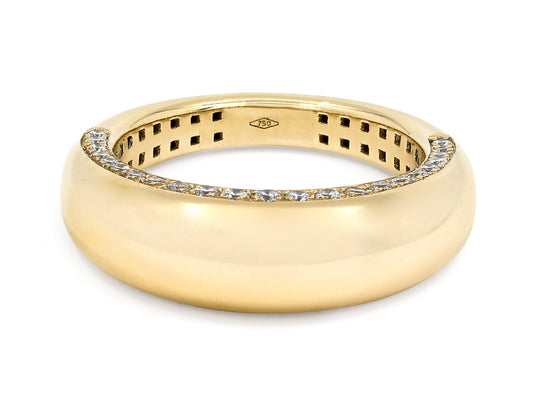
Italy wears the crown for the largest production of high quality gold jewelry made today. However, there is no difference in gold as a universal material used by jewelry makers the world over. Gold is gold, be it 14 karat, 18 karat or 24 karat, yellow or white, but there absolutely is a difference in the quality of the design and manufacture of pieces "Made in Italy" which typically reflect a degree of craftsmanship famed the world over for its excellence and design.
Gold is one of the noble metals found in nature and is known not only for its beauty and color, but also for its density, strength and resistance to discoloration or corrosion. These attributes have made gold an excellent material for jewelry made to last for generations. Pure gold is actually quite soft, so it is often combined with other metals such as copper, silver, nickel and palladium to strengthen it. The amount of these alloys in gold determines its purity, be it 14K, 18K or 24K. 14K gold is hardest with the highest concentration of alloy and 24K is the softest and the purest with the least amount of added alloy. Fine jewelry is typically made in 18K gold, yellow or white. Gold is naturally yellow in color but when alloyed with sufficient white metals such as nickel, palladium or silver and plated with rhodium, the gold becomes silvery white.
Traditional Italian jewelry making techniques have been refined over centuries by skilled artisans using knowledge passed down from generation to generation. Specialized methods of custom fabrication, fine gem setting and the elevated use of colored stones coupled with originality in design have made jewelers such as Bulgari and Buccellati rightfully renowned and their pieces coveted for their exceptionally fine material and workmanship.